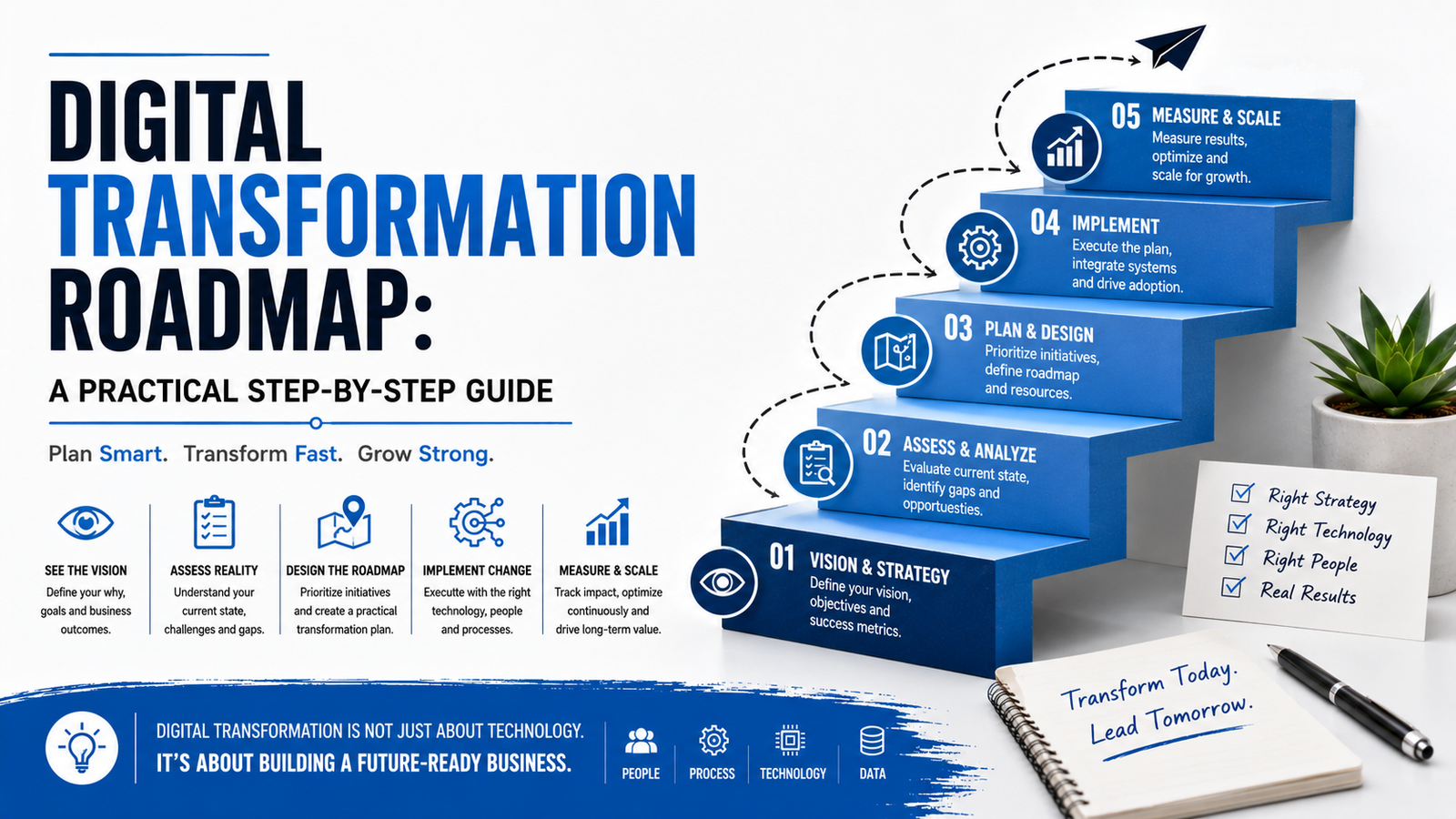
Introduction: Why Every Growing Business Needs a Technology Roadmap
Technology has become one of the most influential drivers of business success. From cloud computing and artificial intelligence (AI) to business automation, data analytics, and cybersecurity, organizations have more technology options than ever before. However, investing in technology without a clear direction often leads to wasted budgets, disconnected systems, and missed opportunities.
This is where a technology roadmap becomes invaluable.
A technology roadmap for business growth is a strategic plan that aligns technology investments with business objectives over time. Rather than adopting every new trend, businesses prioritize initiatives that deliver measurable value, improve operational efficiency, enhance customer experiences, and support long-term scalability.
Whether you're a startup planning your first digital infrastructure or an established enterprise modernizing legacy systems, a well-designed roadmap helps transform technology from an expense into a strategic growth asset.
This guide explains how to create an effective technology roadmap, avoid common planning mistakes, and build a flexible strategy that supports sustainable business growth.
Quick Facts: Technology Roadmaps at a Glance
- A technology roadmap aligns business strategy with technology investments.
- Successful roadmaps improve digital transformation, scalability, and operational efficiency.
- Technology planning should focus on business outcomes rather than individual tools.
- Regular roadmap reviews help organizations adapt to changing market conditions.
- A phased implementation approach reduces project risks and improves ROI.
| Technology Roadmap Element | Business Benefit |
|---|---|
| Strategic Planning | Clear technology direction |
| Infrastructure Assessment | Better resource utilization |
| Digital Transformation | Increased business agility |
| Scalability Planning | Future-ready operations |
| Performance Monitoring | Continuous improvement |
What Is a Technology Roadmap?
A technology roadmap is a structured plan that outlines how technology will support business goals over a defined period.
Unlike a simple IT project schedule, a roadmap connects:
- Business objectives
- Technology initiatives
- Investment priorities
- Resource planning
- Risk management
- Performance measurement
It helps decision-makers understand not only what technologies should be implemented, but also when, why, and how they contribute to business success.
For example, a growing eCommerce company may prioritize upgrading its website, implementing customer analytics, strengthening cybersecurity, and adopting cloud infrastructure over the next three years rather than attempting every initiative simultaneously.
Why Businesses Need a Technology Roadmap
Technology evolves rapidly, making reactive decision-making risky.
Without a roadmap, businesses often experience:
- Duplicate software purchases
- Poor system integration
- Rising operational costs
- Delayed digital transformation
- Inconsistent customer experiences
- Limited scalability
A strategic roadmap provides clarity, ensuring every technology investment supports measurable business outcomes.
Step 1: Define Clear Business Goals
Every successful technology roadmap begins with business objectives rather than technology choices.
Ask questions such as:
- What growth targets are we pursuing?
- Which customer challenges need solving?
- Which processes require automation?
- Where are operational inefficiencies occurring?
- Which technologies support our long-term vision?
Business goals become the foundation for every technology decision.
Statistics Snapshot: Business Priorities Driving Technology Investments
| Business Priority | Technology Contribution |
|---|---|
| Customer Experience | Personalized digital services |
| Operational Efficiency | Automation and workflow optimization |
| Revenue Growth | Scalable digital platforms |
| Data-Driven Decisions | Business intelligence and analytics |
| Risk Reduction | Cybersecurity and compliance |
Step 2: Assess Your Current Technology Landscape
Before investing in new solutions, businesses should evaluate existing systems.
A comprehensive assessment includes:
- Software applications
- Hardware infrastructure
- Cloud services
- Security controls
- Business processes
- Data management practices
- Third-party integrations
This analysis helps identify outdated systems, unnecessary software, and opportunities for modernization.
Understanding the current environment prevents redundant investments.
Step 3: Identify Technology Gaps
Once the current infrastructure is evaluated, businesses can identify areas requiring improvement.
Common technology gaps include:
- Legacy software
- Manual workflows
- Limited automation
- Weak cybersecurity
- Poor system integration
- Insufficient analytics capabilities
- Scalability limitations
Prioritizing these gaps ensures that technology investments solve real business challenges instead of following market trends.
Step 4: Prioritize Initiatives Based on Business Value
Not every technology project deserves equal attention.
Effective roadmaps prioritize initiatives based on:
- Business impact
- Implementation complexity
- Cost
- Risk
- Customer value
- Expected return on investment
For example:
High Priority:
- Cloud migration
- Cybersecurity improvements
- Customer relationship management (CRM)
- Website modernization
Medium Priority:
- AI-powered automation
- Advanced analytics
- Workflow optimization
Lower Priority:
- Experimental technologies without immediate business value
This phased approach improves implementation success.
Statistics Snapshot: High-Impact Technology Investments
| Technology Area | Strategic Benefit |
|---|---|
| Cloud Computing | Flexibility and scalability |
| Artificial Intelligence | Automation and predictive insights |
| Business Analytics | Better strategic decisions |
| Customer Experience Platforms | Increased customer satisfaction |
| Cybersecurity Solutions | Business continuity and trust |
Step 5: Build a Realistic Implementation Timeline
Large technology projects often fail because businesses attempt too much too quickly.
Instead, organize initiatives into phases.
Short-Term (0–12 Months)
- Infrastructure improvements
- Website optimization
- Security enhancements
- Process automation
Medium-Term (1–3 Years)
- Cloud migration
- AI implementation
- Customer data platforms
- Workflow integration
Long-Term (3+ Years)
- Advanced predictive analytics
- Emerging technologies
- Continuous innovation
- Global scalability
Breaking projects into achievable milestones improves adoption and reduces organizational disruption.
Step 6: Include Risk Management and Cybersecurity
Every technology roadmap should include a risk management strategy.
Potential risks include:
- Data breaches
- Budget overruns
- Vendor dependency
- Employee resistance
- System downtime
- Compliance challenges
Businesses should integrate:
- Regular security assessments
- Backup strategies
- Disaster recovery planning
- Employee cybersecurity training
- Compliance monitoring
Organizations modernizing digital infrastructure often strengthen security through professional cybersecurity solutions.
Step 7: Choose Scalable Technology Solutions
Technology should support future growth—not limit it.
When evaluating solutions, businesses should consider:
- Integration capabilities
- Cloud compatibility
- API availability
- Performance under growth
- Vendor support
- Customization options
Many organizations choose custom software development to build flexible systems tailored to long-term business needs.
Comparison Table: Businesses With a Technology Roadmap vs Without One
| Businesses With a Technology Roadmap | Businesses Without a Technology Roadmap |
|---|---|
| Strategic technology investments | Reactive technology purchases |
| Better budget planning | Unplanned spending |
| Scalable digital infrastructure | Growth limitations |
| Improved employee adoption | Technology confusion |
| Stronger competitive advantage | Slower innovation |
Measuring the Success of Your Technology Roadmap
Implementation is only part of the journey.
Organizations should continuously measure outcomes using Key Performance Indicators (KPIs) such as:
- Customer satisfaction
- Revenue growth
- Operational efficiency
- System uptime
- Employee productivity
- Digital adoption rates
- Technology ROI
Regular reviews allow businesses to adjust priorities as market conditions evolve.
A roadmap should remain flexible rather than fixed.
Myth vs Reality: Technology Roadmaps
| Myth | Reality |
|---|---|
| Technology roadmaps are only for large enterprises. | Businesses of every size benefit from structured planning. |
| A roadmap focuses only on IT systems. | It aligns technology with overall business strategy. |
| Once created, a roadmap never changes. | Successful roadmaps evolve as business needs change. |
| Buying new technology guarantees growth. | Strategy, implementation, and adoption determine success. |
| Digital transformation happens quickly. | It is an ongoing process requiring continuous improvement. |
Best Practices for Building a Successful Technology Roadmap
To maximize long-term success:
- Align every technology investment with business goals.
- Involve stakeholders across departments.
- Prioritize customer experience improvements.
- Choose scalable and secure technology.
- Invest in employee training.
- Monitor performance regularly.
- Review the roadmap annually.
- Stay informed about emerging technologies without chasing every trend.
A disciplined approach creates sustainable digital growth.
Key Takeaways
- A technology roadmap connects business strategy with technology investments.
- Business objectives should guide every technology decision.
- Infrastructure assessments identify modernization opportunities.
- Phased implementation reduces risk and improves adoption.
- Scalable technology supports long-term business growth.
- Continuous evaluation keeps the roadmap aligned with changing business needs.
Frequently Asked Questions
1. What is a technology roadmap?
A technology roadmap is a strategic plan that outlines how technology initiatives support business goals over time through structured implementation and continuous improvement.
2. Why is a technology roadmap important?
It helps businesses prioritize investments, improve digital transformation, reduce technology risks, and align technology with organizational objectives.
3. How often should a technology roadmap be updated?
Most organizations review their technology roadmap at least annually or whenever significant business or market changes occur.
4. Can small businesses create technology roadmaps?
Yes. Businesses of all sizes benefit from strategic technology planning, regardless of industry or budget.
5. What technologies should be included in a roadmap?
Common priorities include cloud computing, artificial intelligence, cybersecurity, business analytics, automation, and customer experience platforms, depending on business goals.
Conclusion: A Technology Roadmap Turns Digital Investments into Business Growth
Technology delivers the greatest value when it supports a well-defined business strategy rather than serving as a collection of disconnected tools. A carefully planned technology roadmap provides the structure organizations need to prioritize investments, modernize infrastructure, improve operational efficiency, and prepare for future opportunities.
By defining clear objectives, assessing current capabilities, addressing technology gaps, implementing scalable solutions, and continuously measuring results, businesses can reduce risk while maximizing the return on their digital investments. Equally important is maintaining flexibility, as technology and customer expectations continue to evolve at an unprecedented pace.
Organizations that approach technology planning with a long-term perspective are better equipped to adapt to change, accelerate digital transformation, strengthen customer experiences, and achieve sustainable business growth. In an increasingly competitive marketplace, a strategic technology roadmap is not just an IT planning document—it is a blueprint for innovation, resilience, and long-term success.